Psychotherapeutically Sewing back together The mind body divide
- almatherapycounsel
- 6 hours ago
- 4 min read
The ideas we breathe in through our culture
We are profoundly influenced by our culture, perhaps more than we know. When I read Watching the English (Fox, 2004) at the age of 16, I concluded that I was 95% English and 5% Alice! All of those little tics that I thought were just me; the way I didn't speak to the other same seven commuters on that village train platform throughout my secondary school career (except for a brief detente for a mutual complaint about broken down trains). The way I reflexively apologised, even if it was evidently the other person's fault. The way that I saw wearing sparkle in the day as gauche. (Now the fashions have changed and I am in on the day-time shimmer).
The philosophical origin of the mind-body divide
This pre-amble about the influence of culture introduces the fact that whilst we might not be familiar with the philosophical underpinnings of Cartesian Dualism, we in the West are all the inheritors of four centuries of arguments that have seeped into our foundations. In his Meditations on First Philosophy, Descartes (1641/1996) argued that the mind is immaterial whilst the physical body is material. In this view, our thinking self is like a balloon floating in space and our body serves as a tether which is snapped when we die. Depending on our existential beliefs, at this point the balloon pops and is no more, finds a new tether to this world, or is able to float to the skies, where it can finally reach its true home in heaven.
Monism, theology and modern psychology present a fightback
Spinoza (1677/1994) was the first to comprehensively offer a rebuttal of dualism, offering Monism in his Ethics. He postulated that thought and physicality are two sides of the same coin, inseparable; mind and body are not distinct substances but one single reality understood in two different ways.
Many Christian theologians never accepted the mind-body split, since the fundamental tenet of resurrection is that the body is integral to humanity and is renewed.
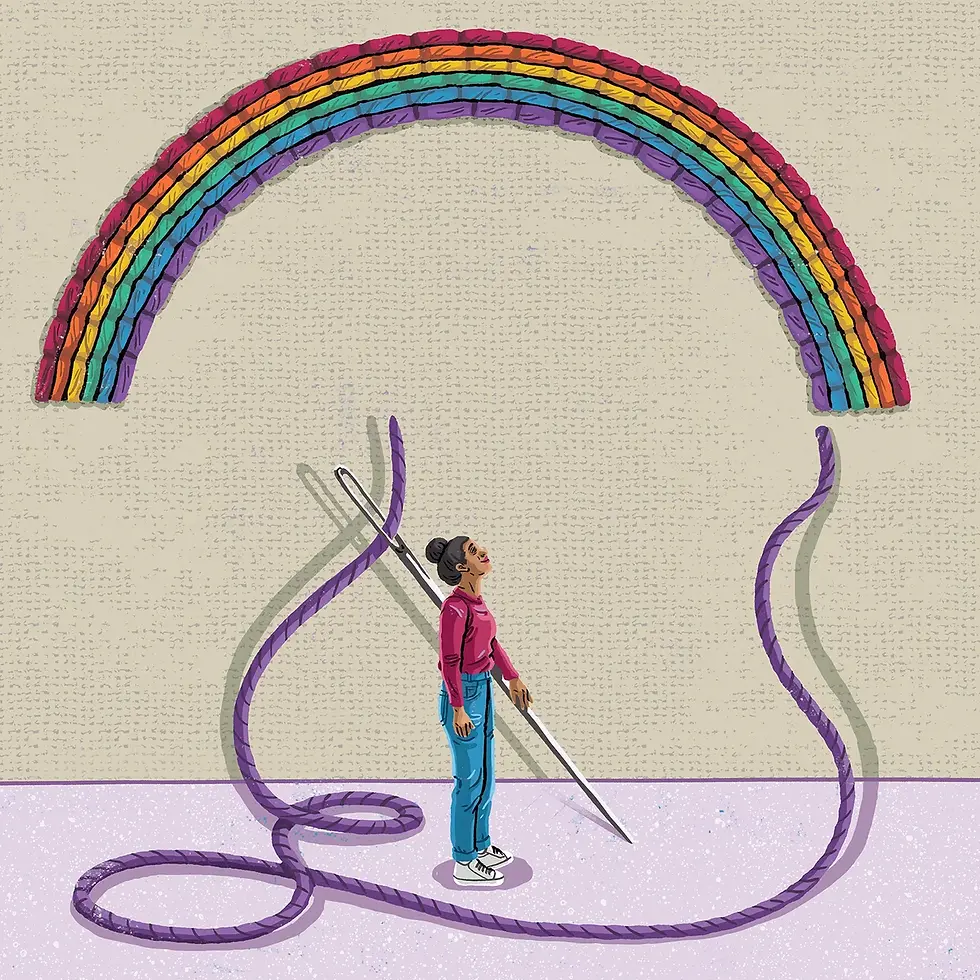
Modern psychology has gradually built a scientific basis for sewing back together the idea of mind and body, with significant consequences for the therapist and client, since:
Neuropsychology demonstrates how specific brain tissue damage can specifically affect parts of personality, morality and consciousness. If the mind were separate from the body, these would remain unaffected, Damasio (1994).
Clinical Psychology now works on a bio-psycho-social model (Engel, 1977) ; clinical depression is seen and treated as a chemical imbalance (bio), a pattern of thought (psycho) and a reaction to environment (social).
Work on the gut-brain axis links the work of psychologists and medical doctors, since the gut microbiome is now known to affect serotonin levels in the brain (Cryan and Dinan, 2012).
The body shows the way
The body doesn't make stories or produce reasons. Because of this, paying attention to its experience can act like the north star- it cannot lead you astray. The body simply shares what it knows.
Whatever the body knows, of warmth, of cold, relaxation, butterflies, shaking, hunger, thirst, tiredness and energy is telling us something- it is a signpost to uncover and follow.
Weaving the body with the mind
Working purely at a somatic level can be powerful and, therapeutically speaking, enough. Paying attention to the physical expression of pain, loss, suffering, shame trauma and abuse, allowing it to be fully expressed and meeting it with care and compassion, can be deeply healing.
Joining the bodily experience to the mind's powerful narrative capacity adds another healing dimension. When the mind grasps new understanding, new perspectives and new healing stories, this becomes a powerful engine for change.
Layers of the mind
Much of the mind's thinking happens at levels below consciousness. We see glimpses of it in the symbols we employ in our dreams. The body's experience is also connected to the deeper consciousness of experience. Allowing a free association with images or symbols that come to mind can help the body-mind axis to process what emerges.
So what does therapy look like which understands the body and mind as a unitary whole?
It could start with a memory that emerged that the client wants to work through. The therapist might ask the client to still their body and, going back into the memory again, share with the therapist what they sense in their body. From the secure base of the client-therapist relationship, the client may be able to fully experience emotions that at the time of the event might have been too overwhelming to stay present to. Experiencing these safely builds the client's sense of self and resilience. Meeting the experience of the body with compassion and care fulfils the client's deep need to be seen and understood. The memory could be reworked, imaginatively bringing in the support or help the client needed at the time.
Another example of how such a mind-body experience could happen is with a feeling of anxiety. The therapist might ask for a description of all bodily sensations. The moment could be expanded to work with the imagination by asking whether the client could imagine it as a shape, a colour, a texture. Could it expand or retract, be moved around inside the body, and brought out of the body for viewing externally.
Allowing the body to lead the way and by sensitively working with that, the client and therapist team can step with that little puddle of light at their feet, one step forward at a time.
Conclusion
Somatic therapy is an area of rapid expansion in modern psychotherapy, and for good reason. When Descartes (1641/1996) declared, 'I think therefore I am', he was placing our whole sense of personhood within the mind. Expanding out the definition of personhood into all aspects of our being enriches every aspect of our humanity, including in our therapy rooms.
A note on AI
AI was used to speed the referencing in this article. The writing is the author's own.
References
Cryan, J.F. and Dinan, T.G. (2012) 'Mind-altering microorganisms: the impact of the gut microbiota on brain and behaviour', Nature Reviews Neuroscience, 13(10), pp. 701–712.
Damasio, A. (1994) Descartes' Error: Emotion, Reason, and the Human Brain. New York: Putnam.
Descartes, R. (1641/1996) Meditations on First Philosophy, translated by J. Cottingham. Cambridge: Cambridge University Press.
Engel, G.L. (1977) 'The need for a new medical model: a challenge for biomedicine', Science, 196(4286), pp. 129–136.
Fox, K. (2004) Watching the English: The Hidden Rules of English Behaviour. London: Hodder & Stoughton.
Spinoza, B. (1677/1994) Ethics, translated by E. Curley. London: Penguin.


Comments